 There are many options to choose from when it comes to orthodontics. These treatments aim to straighten teeth and address other issues that might affect the positioning of teeth, like jaw or facial structure abnormalities.
Devices like braces and clear aligners are common orthodontics used to straighten teeth. These devices apply a constant force on the wearer’s teeth, improving their alignment over time. Patients typically have to wear devices called retainers after treatment to keep their teeth in their new positions.
Your options when it comes to orthodontics
Treatment times with orthodontic devices can be anywhere between 12 to 36 months. Not being fully committed to the treatment can lengthen a patient’s treatment time. The most common teeth alignment issues include overbites, underbites, overjets, crossbites, crooked teeth, and spaces between teeth. Popular orthodontic devices that can be used to fix these problems include the following.
1. Braces
Metal braces have been around for centuries and are still popular for orthodontic treatments. Braces consist of metal brackets that are placed on each tooth and wires that connect them. Tightening the wires increases the pushing force on the patient’s teeth. Braces are the most versatile oral appliance used to straighten teeth, and they can treat severe alignment issues caused by the patient’s jaw being poorly positioned.
The benefits of wearing braces include:
- They are more ideal for patients who might not be committed enough for alternatives like clear aligners
- Braces can tackle a broader range of issues
- There is no risk of misplacing braces
The drawbacks associated with braces include:
- They can get in the way of meals and oral hygiene
- They can make teeth more vulnerable to decay
- They can ruin the aesthetics of the wearer’s smile during treatment
- They are not as comfortable as aligners
- They are removable
There are more discreet versions of traditional metal braces, called ceramic or clear braces. Everything about the treatment is the same, but the metal wires and brackets are replaced with transparent wires and tooth-colored or clear brackets, respectively.
2. Clear aligners
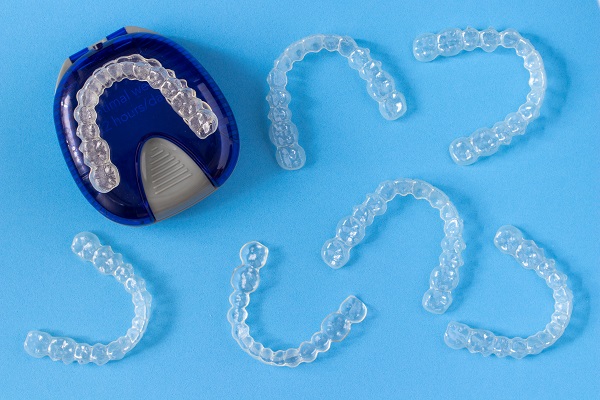
Clear aligners are solid transparent trays that fit snugly over the teeth. These trays move teeth to a better alignment by gradually pushing on them. Treatment with clear aligners involves starting with multiple sets of trays.
The patient wears one set for two weeks before switching to another set that pushes their teeth closer to the desired alignment. By the time the patient is done with their treatment, their teeth should be properly aligned.
The benefits of straightening teeth with clear aligners include:
- Clear aligners are removable, so they do not restrict meals or oral hygiene
- Clear aligners are more comfortable than braces
- Clear aligners are virtually undetectable
- Patients can show off their teeth during treatment
While clear aligners provide many benefits, they are not as versatile as braces. Unlike braces, clear aligners cannot be used to treat teeth misalignment caused by abnormal jaw positioning. People with severe orthodontic issues will probably need braces.
Explore options with our dentist
Ready for a straighter smile? Call or visit our Fullerton clinic to set up an appointment with our dentist.
Request an appointment or call Fullerton Orthodontics & Children's Dentistry at 714-459-8060 for an appointment in our Fullerton office.
Related Posts
Orthodontics help straighten improperly aligned teeth. Teeth alignment problems can ruin the appearance of your smile and leave your teeth more vulnerable to issues like tooth decay and gum disease.Orthodontics uses devices like braces and clear aligners to improve the alignment of teeth by gradually pushing them to better positions over time. Common teeth alignment…
There are several myths and misconceptions about orthodontics. This is the process of correcting teeth alignment issues using appliances like clear alignments and metal braces. Treatment with orthodontics sometimes also leads to improvements in a person’s facial structure and appearance.Misaligned teeth can ruin how a smile looks and can also increase the risk of issues…
Orthodontics takes commitment and patience on the part of the patient and their dentist. The process requires you to invest your time, mental energy, and money in the quest for an improved smile. The good news is that your investment can pay off in a big way. Your oral health can improve, your confidence can…