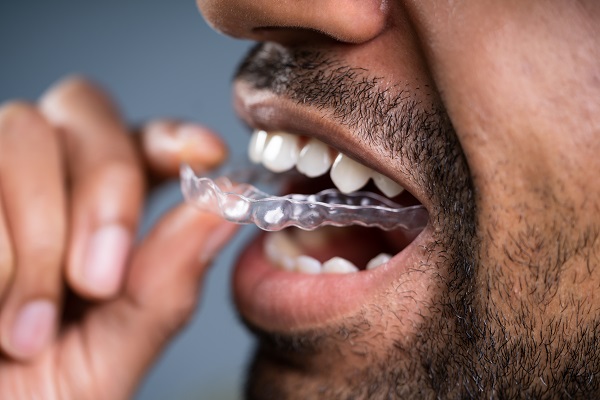
 Orthodontics can be used to treat a variety of teeth alignment issues, like a crossbite or crooked teeth. The alignment of a person’s teeth plays an important role when it comes to their oral and overall health. A person has a bad bite when some or all of their teeth do not come together as they should when the mouth is closed.
This often leads to a range of problems, from not being able to properly chew food to ruining the way that the person’s smile looks. Fortunately, orthodontics provides dentists with various options when it comes to correcting problems with their patients’ teeth alignment.
Common teeth alignment issues that orthodontics can fix
Dealing with poorly aligned teeth? Here are common teeth alignment issues that orthodontic devices like braces can correct.
1. Crossbite
A person is said to have a crossbite when their upper set of teeth sits on the inside of the lower set when their mouth is closed. The issue might only affect a tooth or an entire set of teeth. When left untreated, a crossbite can lead to other problems, such as uneven jaw development, worn-down teeth enamel, and unbalanced jaw movement.
A patient has a subsequent crossbite when their upper teeth at the back sit inside the bottom teeth. A frontal crossbite occurs when the top teeth sit behind the bottom teeth.
The severity of a patient’s condition often determines how a dentist approaches treating their crossbite. Clear aligners can be used if the patient’s issue is not caused by their jaw being in the wrong position, while braces can be used in all cases.
2. Underbite
An underbite occurs when the lower set of teeth protrude past the upper set. It creates a “bulldog” type of look, with the patient appearing to frown whenever their face is in a neutral position. The condition puts stress on a person’s teeth and often leads to teeth wearing down or becoming damaged. The condition also weakens the temporomandibular joints (TMJ), increasing the risk of TMJ-related issues developing.
Braces are required to treat severe underbites because there might be a need to move the position of the patient’s jaw. Minor cases can be treated with clear aligners.
3. Open bite
A frontal open bite occurs when the upper and lower jaws do not extend as far out as they should. The condition can be the result of mouth breathing, tongue pushing, or extreme thumb sucking. A posterior open bite occurs when only the back teeth fail to extend as they should.
An open bite often leads to tongue thrusts, speech issues, and difficulty swallowing. Minor cases can be treated with clear aligners, while severe cases require braces and other appliances that can move the patient’s jaw.
Get straighter teeth
Dealing with poorly aligned teeth? Call or stop by our Fullerton clinic to learn more about how our dentist can fix a range of orthodontic issues.
Request an appointment or call Fullerton Orthodontics & Children's Dentistry at 714-459-8060 for an appointment in our Fullerton office.
Related Posts
Orthodontics can fix almost all teeth alignment issues. Poorly aligned teeth can ruin the way that your smile looks, and they can also leave you more vulnerable to a variety of oral issues, like tooth decay and gum disease, because it is harder to remove plaque from teeth surfaces.Improperly aligned teeth can also make simple…
Traditional metal braces have served as the foundation for orthodontics for over a century. These metal appliances are not the most aesthetically pleasing oral appliances, but getting braces is still the most effective way to correct severe orthodontic issues.Traditional braces are permanently fixed in place once attached by a dentist, and they apply constant force…
Orthodontics aims to straighten teeth and address a variety of issues that can develop as a result of poor teeth or jaw alignment. Issues that can be treated with orthodontic devices include spaces between teeth, crossbites, and crooked teeth.Orthodontics can also be used as preventative dentistry because it can be used to fix issues with…